Key takeaways
- OpenAI launched Businesses in ChatGPT on November 10. Eligible businesses with a website can claim and verify their profile, and it’s free at launch.
- Business Agents (an AI that answers buyer questions for you) are only for US ecommerce and online service businesses for now.
- Claiming won’t get you recommended more. OpenAI says ChatGPT keeps making its own picks.
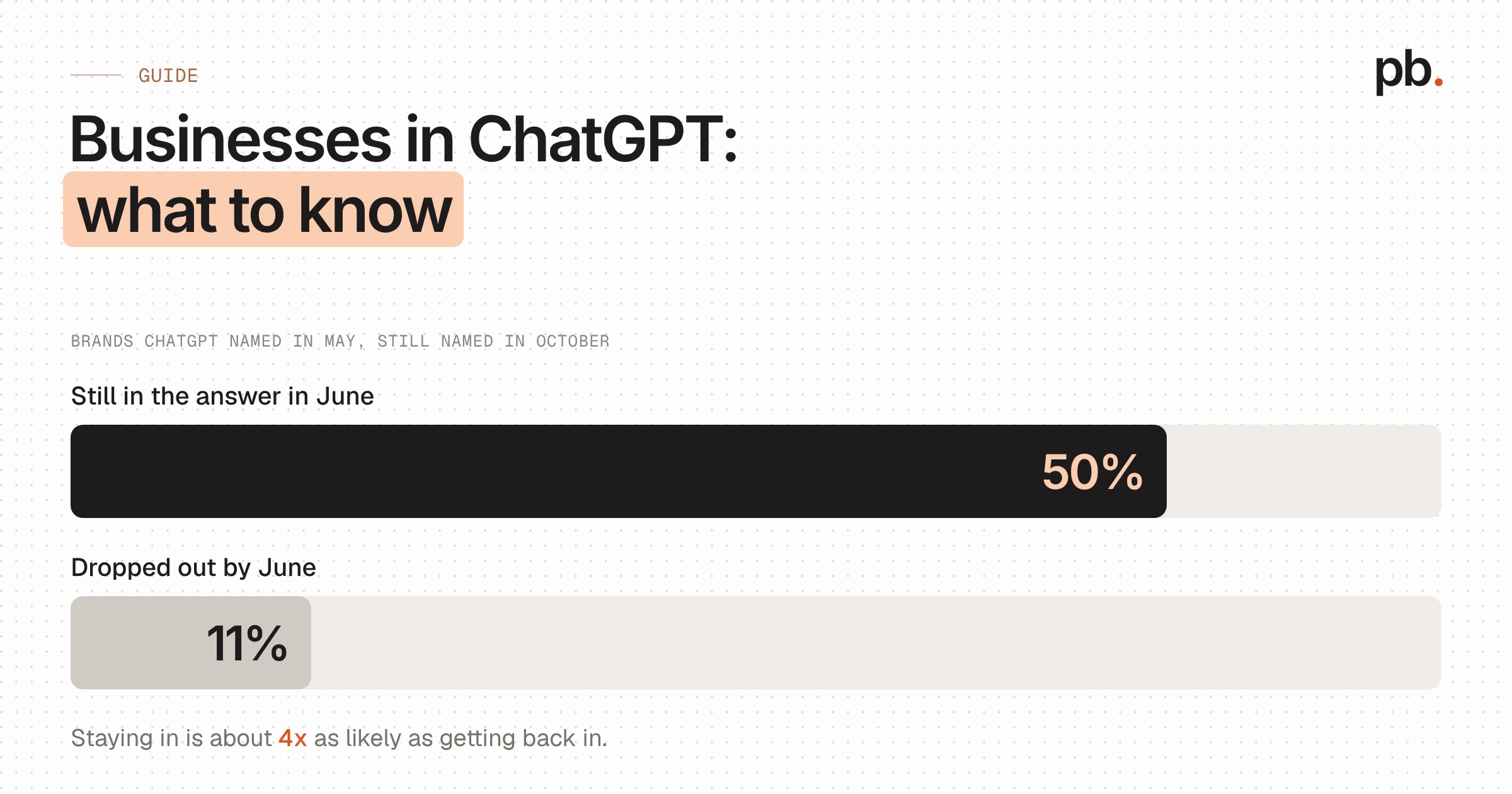
- In our data, brands that were in ChatGPT’s answers in June were about 4x as likely to still be named in October as brands that had dropped out.
On November 10, OpenAI launched Businesses in ChatGPT. For the first time, a business can claim its own profile inside ChatGPT, fix its info and see official numbers on how often ChatGPT mentions it.
People are already calling it the new Google Business Profile. I went through everything OpenAI published and the coverage since, and pulled our own data to see if getting in early actually matters. This is what I’d want my team to know (and yours).
What it is
When ChatGPT names your business in an answer, people can open a profile for it. Now you can claim that profile in the new Business Hub, verify it and run it yourself. Verified profiles get a blue check.
It’s in beta. Claiming a profile and publishing an agent are free at launch, though OpenAI left the door open to charging later.
Who can claim
Any eligible business with a website, in places where ChatGPT is available. Eligibility also depends on your industry and location, and OpenAI runs its own checks. You have to own the business or be allowed to act for it, and the person running the profile goes through an ID check (OpenAI uses Persona for this).
Shopify stores can connect from the Hub or from their Shopify admin. Big advertisers and Enterprise customers go through their OpenAI rep instead.
What you can change
Once you’re verified you can edit your name, category, address or service area, hours, contact details, and the products or services you offer. Retailers can upload a product feed with prices and stock.
I’d make all of it match what’s on your website and your other listings. If your hours or category say one thing in ChatGPT and something else on Google, you’re giving AI two answers to pick from.
What the insights show
This is the part I’m most interested in. Business Hub shows you the last 28 days of activity:
- Mentions: how often ChatGPT mentions your business. For an online business that means pointing to your website, and for a local business it means showing your location.
- Website clicks from ChatGPT to your site.
- Topics that keep coming up in answers that reference you.
Numbers only show up once there’s enough activity, and a blank number can just mean it’s still collecting. You never see anyone’s chats.
Business Agents
If you’re a US ecommerce or online service business, you can also publish a Business Agent. It’s an AI that answers buyer questions about your products inside ChatGPT, in a separate chat that’s labeled so people know they’re talking to your agent and not ChatGPT itself.
The rules are strict. The agent has to say it’s AI, it can’t use fake urgency or keep pushing after someone says no, it can’t ask for sensitive info, and it can’t buy or book anything without the person saying yes. For now checkout still happens on your own site.
Ads
You can also make your agent the landing spot for a ChatGPT ad. That ad format is still a limited test with selected advertisers, and sponsored spots are labeled. OpenAI says paying for ads doesn’t change how often ChatGPT recommends you.
What claiming won’t do
- Get you recommended more. OpenAI says claiming doesn’t guarantee higher placement or sales, and ChatGPT keeps making its own picks.
- Cover other AI tools. This is only ChatGPT, so Google AI Mode, Gemini, Copilot and Perplexity are all still on you.
- Show you competitors. The insights only cover your own business.
- Handle a bunch of brands at once. Each brand gets claimed separately for now.
ChatGPT still decides who to name based on what it reads about you across the web. The profile helps it get your details right, but you still have to earn the mention.
Does getting in early matter?
When Google let businesses claim their listings, most waited. Six years in, about 84% of places on Google still hadn’t claimed theirs, so the few that did had a lot less competition.
I wanted to know if being early matters in ChatGPT too, so we pulled our data. We took brands ChatGPT named in unbranded answers in May and split them by whether it was still naming them in early June. Of the brands still in the answer in June, about 50% were still being named in October. Of the ones that had dropped out, only about 11% made it back.
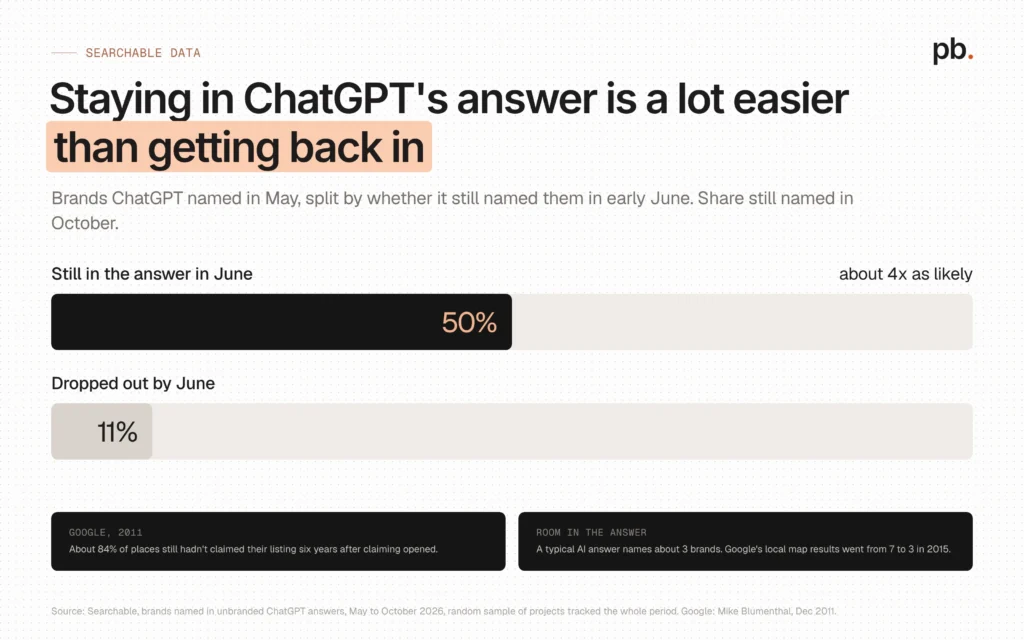
That’s about 4x. Once a brand is in the answer it tends to stay, and once it falls out it’s hard to get back in. Claiming won’t put you in the answer, but I wouldn’t wait around on this either.
There also isn’t much room. In our data a typical AI answer names about 3 brands. Google cut its local map results from 7 businesses to 3 back in 2015, and everyone in spots 4 to 7 lost views and calls overnight. ChatGPT is starting out at the smaller number.
What I’d do this week
- Claim and verify your business in Business Hub (or connect your Shopify store).
- Make your name, category, hours and contact details match everywhere they show up online.
- If you sell products, upload a feed with current prices and stock.
- Write down how often AI answers name you today, in ChatGPT and the other tools, so you can actually see what changes.
- If you qualify for an agent, test it hard before you put any ad money behind it.
- Agencies: get a written OK from each client before you claim for them, and read OpenAI’s terms before you put Business Hub numbers in client reports.
What we still don’t know
- What it’ll cost once the free launch period is over.
- How much activity it takes before your insights show up.
- Which industries qualify, since there’s no list yet.
- When more countries and business types open up for agents.
- Whether one business can run more than one agent.
I’ll keep updating this as it rolls out. If you’ve already claimed yours, I’d love to hear what you’re seeing in the insights.
Sources
- Searchable analysis of brands named in unbranded ChatGPT answers, May to October 2026, from a random sample of projects tracked the whole period. Typical brands per AI answer is from Searchable data across AI tools.
- OpenAI: Introducing Businesses in ChatGPT
- VentureBeat: OpenAI lets you claim your business in ChatGPT
- The Next Web: Businesses in ChatGPT and Business Agents
- Reuters via MarketScreener: OpenAI lets businesses claim ChatGPT profiles
- WebProNews: Business Hub and Business Agents
- Dynamic Business: how to claim your business in ChatGPT
- Mike Blumenthal: the growth of Google Places claimed listings (2011)